Top News of Last Week with ANA

Azad News Agency (ANA) published a number of scientific and technological news during the past week whose top ones are as follows:
Iran-Made System Paves Way for DNA, RNA Analysis in Biology Labs
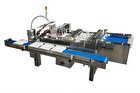
Iranian technologists at a knowledge-based company indigenized the GelDoc device, enabling the examination of molecules like DNA, RNA or proteins samples on electrophoresis gels in biology laboratories.
“One of our products is the GelDoc device, which has been upgraded compared to older models. GelDoc is an advanced laboratory device used for imaging and documenting electrophoresis gels. In biology and microbial laboratories, to examine molecules such as DNA, RNA or proteins, samples are placed on an electrophoresis gel and the molecules are separated in the gel by passing an electric current. After this separation, we need an imaging system to view and record the results, and GelDoc systems are used in this field,” said Romisa Sae’edi, a technologist at the knowledge-based company.
“This device allows for gel electrophoresis imaging with an integrated system and has a built-in mini PC. It is also programmed in such a way that all camera parameters, including contrast and sharpness, can be changed,” she added.
“The GelDoc has a touch screen monitor and users can view, rotate and zoom images with it. This complete package makes working with laboratory gels much easier and more accurate than before,” Sae’edi noted.
Iranian Scientists Produce Engineered Oncolytic Virus for Treatment of Glioblastoma Cancer
A research team of an Iranian knowledge-based company stationed at Pardis Science and Technology Park near Tehran succeeded in producing an engineered oncolytic virus for the treatment of glioblastoma cancer.
The main focus of the company is on the design and manipulation of vectors and viruses. By providing advanced GLP and GMP infrastructure and the presence of a team of experienced researchers, the complex is able to complete the full cycle of biological and biotechnological product production from zero to one hundred; from proposal and vector design to vector production, conducting cellular and animal experiments, and finally making the final product.
“Our product has been manufactured in three series and all of its preclinical stages have been completed. We are currently compiling documentation to obtain approval from the Food and Drug Administration of Iran and will soon enter the clinical phases,” said Massoumeh Alamdar, the production manager and a research team member of the knowledge-based company.
“Our product is used to treat glioblastoma cancer. It is actually an engineered oncolytic virus that, through genetic changes and manipulations, has been transformed into a form that enjoys the capability to target and destroy cancer cells. The technical and research stages of this product have been completed and we are now preparing its documentation,” she added.
Iran’s Royan Research Institute Using Umbilical Cord Stem Cells to Treat Arthritis
Iranian scientists at the Royan Research Institute’s Cord Blood Bank started treatment of patients with severe arthritis with umbilical cord stem cells, describing the initial results as highly successful.
“We have started treating patients with severe arthritis, including knee, hip and shoulder joint arthritis, with umbilical cord stem cells since last week, and the initial research results have been very promising,” said Morteza Zarrabi, the managing director of the Royan Research Institute’s Cord Blood Bank.
Noting that the product has reached a stage where umbilical cord stem cells can now be used to treat patients with arthritis, he said, “We are making efforts to provide the possibility of treating various diseases by utilizing stem cells from blood and umbilical cord tissue, and the initial results have been very successful.”
Iranian Scientist Wins Mustafa Prize 2025
Iranian scientist Vahhab Mirrokni, an adjunct associate professor at the Courant Institute at New York University, won the 6th Mustafa (PBUH) Prize along with his colleagues from Turkey and India.
Mehmet Toner, professor of biomedical engineering at Harvard University from Turkey and Mohammad K. Nazeeruddin, professor of chemistry at the EPFL, Sion Campus, from India, were the other winners of the prestigious prize.
The Mustafa Prize, a top science and technology award, is granted biennially to the top researchers and scientists of the Islamic world in three categories: “Life and Medical Science and Technology”, “Information and Communication Science and Technology”, and “Basic and Engineering Sciences”.
The Prize is granted to works deemed to have improved human life, have made tangible and cutting-edge innovations on the boundaries of science, or have presented new scientific methodology.
The laureates in each category will be awarded USD 500,000/- which is financed through the endowments made to the Prize. The laureates will also be adorned with a special Medal and a certificate.
Iran-Made Software Estimates Costs of Pressurized Irrigation Systems before Implementation
Iranian researchers at the University of Tehran succeeded in designing and developing a software to estimate the costs of pressurized irrigation systems before the design and implementation stages.
Researchers at the Department of Irrigation and Development Engineering at the University of Tehran achieved important practical results by conducting a study titled ‘Cost Modeling of Pressurized Irrigation Systems’ and found that this technological achievement played a fundamental role in optimizing the planning and management processes of water and soil project funds and is an important step towards improving the efficiency of irrigation systems and agricultural sustainability.
“In the first phase, a comprehensive database including independent variables (factors affecting costs) and dependent variables (costs of different parts of each system) was prepared in full detail from sprinkler and spot irrigation projects carried out in different parts of the country over a 20-year period,” said Khaled Ahmad Aali, a faculty member of the University of Tehran.
Noting that the dependent variable of this study, the cost of irrigation systems, was divided into cost of pumping station and central control system, cost of equipment inside the farm, cost of installation and operation of the system and pumping station, and total cost, he said, “In the next phase, using different feature selection techniques, the most important and effective features on the cost of different sections were identified.”
“For this, feature selection was carried out with different algorithms WCC, LCA, GA, PSO, ACO, ICA, LA, HTS, FOA, DSOS and CUK,” Ahmad Aali said.
“In the next stage, using the most effective selected variables, various models of multivariate linear regression, support vector regression, artificial neural networks, gene expression programming, genetic algorithm, decision tree and deep learning were used to estimate the costs of each section and based on different statistics, the best models in each section were introduced,” he added.
Iranian Experts Design Smart Mammography Interpretation System
Iranian specialists have managed to design and make a smart mammography interpretation system.
“In this project, artificial intelligence algorithms, machine learning (ML) and deep learning (DL), were used in a way that they are able to interpret mammography results,” said Parastou Kordestani Moqaddam, an assistant professor at Lorestan University of Medical Sciences.
Noting that this can increase the sensitivity necessary to improve the accuracy in interpreting the results of medical diagnostic tests, she said, “Previous studies have concluded that deep learning and machine learning can be very useful in advancing the identification of abnormalities in mammography and provide significant assistance to medical staff.”
“In this project, after reviewing the studies conducted and examining the strengths and weaknesses of these studies, the research team designed an optimal artificial intelligence assistant method for interpreting mammography images to detect abnormalities. This artificial intelligence-based tool will save radiologists' time and help young and inexperienced radiologists achieve more accurate, faster, and more reliable diagnoses,” Kordestani Moqaddam said.
Iran Exports 12 Million Dollars of Nanocatalysts Last Year
Iranian companies have been able to produce and export nanocatalysts to Iraq, Turkey, Russia and Venezuela worth of $12 million in the past Persian calendar year (ended on March 20).
Figures show that this year alone, with domestic production and reduced imports, nearly $75 million in gasoline imports have been saved. In total, the foreign exchange savings resulting from the supply of these products within the country have so far reached a figure of over $360 million; a figure that reflects the strategic role of nanocatalysts in Iran’s energy economy.
To date, over 45 different types of nanocatalysts have been produced and marketed by 11 domestic companies. These products are now used in the heart of the country’s refineries and petrochemical complexes and have been able to minimize the country’s need for imported catalysts.
Iran Nanotechnology Innovation Council (INIC) announced that 20% of the country's nanotechnology market belongs to nanocatalyts.
“Nanocatalysts have a 20% share of Iran’s nanotechnology market,” the INIC reported.
“At present, 17 nanotechnology companies are active in the two fields of oil and gas and auto-making in Iran which have succeeded in winning one fifth of the country's nanotechnology market,” it added.
Iranian Knowledge-Based Firms’ Income Grows 60% in One Year
Iranian Vice President for Science, Technology and Knowledge-Based Economy Hossein Afshin announced a significant increase in the income of knowledge-based companies in the past Persian calendar year (ended on March 20).
“The income of these companies has reached 1,833 trillion tomans (Iran's currency), which has increased by 60% compared to the previous year,” Afshin said.
Noting that the share of sales of knowledge-based products has increased by 40% last year compared to the previous year, he added, “This figure indicates an 81% share of knowledge-based products in the total sales of technological companies, which indicates the high share of these companies in the national economy.”
“Start-up companies, which constitute 67% of all knowledge-based companies, have a small share in the knowledge-based economy due to their nature,” Afshin said.
Fourth Drilling Rig Starts Operations at Iran’s Sepehr, Jofeir Fields
The fourth drilling rig started operations at Iran’s Sepehr and Jofeir oil fields, an official said.
Abbas Goudarzi Arjmand, the project manager for the development of the Sepehr and Jofeir oil fields, made the remarks, stressing the importance of accelerating drilling to meet production targets.
"To achieve the target production of 110,000 barrels per day by the end of the second development phase, we need a minimum of six drilling rigs active annually. Therefore, the addition of MAPNA's second drilling rig in the year 1404 (2025-2026) is a necessary and critical step," he said.
Goudarzi Arjmand added that deploying new contractors will not only speed up drilling and well completion operations but will also create constructive competition among contractors active in the West Karun region, leading to qualitative and quantitative improvements.
With the installation of MAPNA's first rig, named ‘MAPNA Nour-2’, the number of active rigs in the Sepehr and Jofeir fields has increased to four. The rig's first task will be to drill a well in the Fahliyan reservoir to a depth of approximately 4,500 meters. The well is expected to produce over 4,000 barrels of oil per day.
Sepehr and Jofeir oilfields in the Southwestern part of Iran worth $2.8 billion with daily production of 50,000 bpd became officially operational in 2024.
Iran-Made Nanocatalyst Shows 40 Percent More Efficiency than Foreign Counterparts
In one of the largest replacement projects of the year, the Iran-made RCD unit catalyst used in the Shazand Arak refinery was able to perform 40% better than its foreign counterpart.
In addition to economic benefits, the use of Iranian nanocatalysts has also had significant effects on the country's energy security. One of the most prominent instances of success in this area is the use of the RCD unit catalyst manufactured by ‘Eksir Novin Farayand Asia’ company in Shazand Arak refinery.
This catalyst replaced the foreign sample early last year and performed beyond expectations. Studies indicate that the Iranian catalyst was able to perform 40% better than the imported sample and, with a longer lifespan, significantly increase the efficiency of the refinery unit.
The results of this replacement were not limited to improving performance, but also brought significant savings; In the same project, the use of Iranian catalyst saved 110 million liters of gasoline, which is equivalent to a $75 million reduction in gasoline import costs, and this achievement is considered as one of the largest replacement projects of the year in the country's refining industry.
Iran to Ratify 1st Private Petchem Contract for Development of Gasfields
The first private petrochemical contract for the development of gasfields will be ratified soon, the CEO of the National Petrochemical Company said.
Hassan Abbaszadeh told reporters on the sidelines of the IranPlast 19th International Exhibition that petrochemical companies have entered upstream field development and the first private-sector contract for developing gasfields will soon be ratified and become active, the oil ministry’s news webstie reported.
He stated that a process which previously took several years has been reduced to about six months due to efforts by the Ministry of Petroleum. This will enable the petrochemical industry to meet its gas feedstock needs through the development of these gasfields, he added.
The deputy petroleum minister cited flare gas recovery as one method of supplying petrochemical feedstock, noting that about 21 million cubic meters of gas from flares has been supplied to the industry this year. This achievement was realized through investments by major petrochemical holdings and primarily involves associated petroleum gas. There are also flares in South Pars phases, and we are negotiating with the private sector to attract investment for utilizing this gas, he said.
Iranian Scientists Make Supercritical Fluid Device
A faculty member of the Chemical Engineering Department of Qom University announced manufacturing of a supercritical fluid device, saying that making, assessment, and testing of the device were conducted within the framework of the thesis of postgraduate students.
“A supercritical fluid device is a complex, high-pressure system that is applied to use materials in a supercritical state (such as CO₂, water, or hydrocarbons) in processes like enhanced oil recovery (EOR), extraction, separation, chromatography, nanoparticle formulation, and purification,” Mehdi Sediqi said.
Noting that as a new and sustainable technology, the supercritical fluid device has opened its place in various industries as a superior alternative to traditional methods, he said, “Although the initial cost and operational complexity are considered as obstacles, its numerous advantages, including the quality of the final product, safety, speed, and environmental compatibility, provide its economic justification, specially for the production of high-value-added products. Future advances in energy optimization and scaling up of these systems for larger industrial scale use will further expand the application of this technology.”
“The device operates both statically and dynamically,” Sediqi added.
Iranian Experts to Study Development Path of Nanobubbles in Oil, Gas, Petrochemical Industries
A specialized meeting called ‘Technology to the Oil Well’ will be held by Iranian specialists to study the development path of nanobubbles in the oil, gas, and petrochemical industries.
The Nano and Micro Technologies Development Headquarters will hold the meeting in cooperation with a knowledge-based group and with the support of the Innovation and Prosperity Fund of Iran.
‘Review and study of the analysis and monitoring report of nanobubble technology’, ‘Introduction of projects carried out with nanobubble technology in Iran’, ‘Exchange of views with oil, gas, and petrochemical companies’, and ‘Introduction of the support capacities of the Nano Technologies Development Headquarters’ are among the topics of the meeting.
The meeting will be held online on Tuesday, September 16, from 9:00 AM to 1:00 PM.
Iranian Researchers Gain Access to IranDoc’s Smart Assistant for Duplicate Search
The IranDoc smart assistant for duplicate searching has been designed and rendered to the Iranian researchers as the first assistant service based on artificial intelligence technology, Iranian Research Institute for Information Science and Technology (IranDoc) said in a report.
The report said that the assistant is now available to professors, students, and universities and is a new step towards facilitating researchers’ interaction with IranDoc systems.
With the ability to respond around the clock, the smart assistant for searching for duplicates enables users to ask questions related to the duplicate search system and provides them with the necessary guidance automatically and online. This smart tool is the first in the series of IranDoc’s artificial intelligence assistants that will gradually be made available to the country’s scientific and technological community by the end of this year.
The system retrieves similar writings by automatically exploring these works and displays the extent of similarity and source of similar information.
IranDoc focuses on research, science and technology information management, education, research and information services collaborations, and supporting science and technology policy-making.
4155/v